Friday, December 27, 2013

George Gilder on the nanny state

(Actually, he calls it "the compassionate state.")

Man is “cuckolded by the compassionate state”; the government usurps his age-old role [as provider], which is why “welfare now erodes work and family and thus keeps poor people poor.” When women are less dependent on men, men no longer benefit from women’s civilizing powers, and all hell breaks loose: “Because female sexuality, as it evolved over the millennia, is psychologically rooted in the bearing and nurturing of children, women have long horizons within their very bodies, glimpses of eternity within their wombs.” 

From Gilder's Wealth and Poverty, published 1981, a Book of the Month Club pick, and widely influential. (As quoted in Jennifer Szalai, "Just Deserts," The Nation, December 9, 2013.)


Wednesday, November 20, 2013

Zach Howe: Against Being Born This Way


 Full title of Howe's column on Blunderbuss is: "I’m Queer & So Are You: Against Being Born This Way." An excerpt:

What a travesty we have made of a movement for sexual liberation! By refusing to question our sexuality—I was born this way, now leave me alone!—queers are often just as resistant to deviance as the straights we’re supposedly freeing ourselves from. Gay men talk a lot about our sexual development—when did you come out, what did your parents say, did you ever sleep with a woman? Countless men, learning that I have not only slept with a woman but was desperately in love with one for four years, have challenged me to prove I’m really gay—when was the last time you slept with a woman? Are you still into that? You’re not like bi are you?

Listen to yourselves. You sound like straight people.

Saturday, November 16, 2013

Third Gender Update, Bangladesh and Germany

Bangladesh has recognized the gender identity of hijras, whose rights are now recognized, including the right to identify their gender as hijra on government-issued documents, including passports (November 2013).

Germany (October 2013) has become the first country in Europe to permit babies with characteristics of both sexes to be registered as neither male nor female. Parents can choose to leave the gender category blank, creating the category of "indeterminate sex."

Friday, November 15, 2013

Successful campaign against female cutting in Upper Egypt

Al-Ahram Hebdo (in French) reports on a campaign in Upper Egypt against female cutting (AKA female circumcision):

Female circumcision is declining in Upper Egypt, where a campaign was launched in 1994 by UNICEF to end this ancient practice. 50.3% of girls age 15 to 19 were circumcised in 2010, as opposed to 97% in 2003.

Read more here (in French of course).

Saturday, June 22, 2013

Teddy Roosevelt and race suicide

I've been teaching about eugenics for several years, but I never knew, until I read this piece by Katha Pollitt, that President Theodore Roosevelt was a major proponent.

Read a bit about this here. And here is his famous 1905 speech on American Motherhood.


Library of Congress' summary of this image:

Concerning Race Suicide: “The Idle Stork” on the left has little to do as the upper class chooses not to make babies, whereas “The Strenuous Stork” is being worked to death by a population explosion among the lower class.

Tuesday, May 14, 2013

"Adland Gal" : Kerry Low Low

This ad is supposed to be a spoof of generic ads that play on female fears with regard to body image, dieting, food, etc. It's supposed to be smarter than all that and to appeal to women who are smarter than all that and are hip to the clichés. One my students just wrote a paper, arguing that the ad in fact just reproduces conventional ideas about female body image. All the while selling the low-fat cheese product, Kerry Low Low. I think my student is correct, and she got an "A" on the paper. Whaddya think? 


Monday, March 04, 2013

The Nude, The Male Gaze

John Berger's 1972 television show, "Ways of Seeing," episode 2: on the nude.

"Men dream of women, women dream of themselves being dreamt on. Men look at women, women watch themselves being looked at."


Monday, February 18, 2013

NCAA discipline

from Inside Higher Ed, Feb. 8, 2013:

Last month, the women’s track and field coach Bev Kearney was forced out of her 20-year-long job at the University of Texas at Austin, two months after she admitted to having had a relationship with an athlete on her team in 2002. 

Days later, the university -- staring down a potential lawsuit by Kearney, USA Today reported -- announced that an assistant football coach, Major Applewhite, had faced an 11-month salary freeze and mandated counseling after revealing he had a one-night-stand with a student athletic trainer four years ago. 

 Kearney is a black lesbian who was due for a pay raise and contract extension before admitting her indiscretion in November. Applewhite is a white, heterosexual former Texas quarterback who has been promoted and whose salary has more than doubled since the freeze lifted. 

The juxtaposition of the two cases of coach-student affairs has raised questions of fairness, discrimination and policy, not even a year after the NCAA released a report urging colleges to codify rules prohibiting relationships between coaches and athletes. 

Read on here.

Thursday, January 31, 2013

abortion: leeches, lye, Spanish fly

Leeches, Lye and Spanish Fly
By KATE MANNING
New York Times, January 21, 2013

WHY would a woman put a leech inside her body, in the most private of female places? Why would she put cayenne pepper there?

Why might a woman swallow lye? Gunpowder? Why would a woman hit herself about the abdomen with a meat pulverizer? A brickbat? Throw herself down the stairs? 

Why would she syringe herself, internally, with turpentine? Gin? Drink laundry bluing? 

Why might she probe herself with a piece of whalebone? A turkey feather? A knitting needle? 

Why would she consume medicine made of pulverized Spanish fly? How about powdered ergot, a poisonous fungus? Or strychnine, a poison? 

Why would she take a bath in scalding water? Or spend the night in the snow? 

Because she wanted to end a pregnancy. Historically, women have chosen all those methods to induce abortion. The first known descriptions appeared around 1500 B.C. in the Ebers Papyrus, an ancient Egyptian medical text that mentioned an abortion engineered by a plant-fiber tampon coated with honey and crushed dates. 

For most of history, abortion has been a dangerous procedure a woman attempted to perform on herself. In private. Without painkillers. 

What is most striking about this history of probes and poisons is that throughout all recorded time, there have been women so desperate to end a pregnancy that they were willing to endure excruciating pain and considerable risk, including infection, sterility, permanent injury, puncture and hemorrhage, to say nothing of shame and ostracism. Where abortion was illegal, they risked prosecution and imprisonment. And death, of course. 
The newspapers of the mid-1800s were full of advertisements for potions, pills and powders that claimed to cause miscarriage. “French Periodical Pills: Warranted to Have the Desired Effect in All Cases” was one such knowing ad that appeared in The Boston Daily Times in 1845. Those ads spoke euphemistically of “curing female complaint,” or “renovating” or “unblocking” the womb. They treated a problem that women called “suppression of the courses,” the idea being that monthly “turns” were the norm and that any cessation of normal periods meant they were “suppressed,” or that the womb was “obstructed.” 

Many of the cures for these “ailments” were nothing but sugar and dust. But some of them were nonetheless quite effective. Those were the dangerous ones, containing as they commonly did, turpentine, opium, pennyroyal, aloes, snakeroot, myrrh or oil of rue. One of the most common ingredients was ergot, or claviceps purpurea, a fungus found on the stalks of grain. Women as early as the 16th century had observed that cows that consumed ergot miscarried their calves. The fungus, however, had disastrous side effects, called ergotism, also known as St. Anthony’s fire. Symptoms included a burning sensation in the limbs because of blood constriction, which led to gangrene. The poison could also cause seizures, itching, psychosis, vomiting, contractions, diarrhea and death.
Oil of tansy was another common abortifacient. Here is John Irving’s unforgettable description, from his scrupulously researched novel “The Cider House Rules,” of a doctor trying to save a woman after too many tansy-oil miscarriages: “Her abdomen was full of blood...but when he tried to sew up [the] uterus, his stitches simply pulled through the tissue, which he noticed was the texture of a soft cheese...his finger passed as easily through the intestine as through gelatin.” Tansy oil rots internal organs. 

Notwithstanding such ghastly scenarios, abortion did not always — or even usually — result in death. Many women survived it, which is why for most of history it was one of the main forms of birth control. If they did choose to enlist help, they most often called upon another woman, usually a skilled midwife. But by the 1850s, male doctors began to take over all aspects of women’s reproductive care, sidelining midwives and leading the movement to outlaw the practice of abortion. Did they save some women’s lives by unmasking the dangers of “medicines” to cause miscarriage? Undoubtedly. But by withholding midwives’ knowledge of how to provide a relatively safe abortion in the early stage of pregnancy, they drove other women to undergo the procedure at the hands of the unskilled, until the United States Supreme Court made abortion legal on Jan. 22, 1973. 

Women’s historical willingness to endure horrible dangers, to submit to extreme and prolonged pain, to risk grave injury and death rather than remain pregnant, tells us something important about female desperation and determination, and the price women were — and still are — willing to pay to control their own bodies. What it tells us is that women will always find ways to end an unwanted pregnancy, no matter what the law says, no matter the risks to themselves. 

If the Supreme Court were ever to overturn Roe v. Wade, or if anti-abortion forces continue to successfully chisel away at a woman’s access to safe abortion, many women will still choose abortion — by their own hands. Leeches, lye and Spanish fly are still among the many tools available to the self-abortionist. So are knitting needles, with predictable, disastrous consequences. There is no law that will end the practice of abortion, only laws that can protect a woman’s right to choose it, or not, and to keep it the safe and private procedure still available to us in 2013, 40 years after the Supreme Court made it legal. 

Kate Manning is the author of a forthcoming novel, “My Notorious Life,” about a 19th-century midwife.

Saturday, January 19, 2013

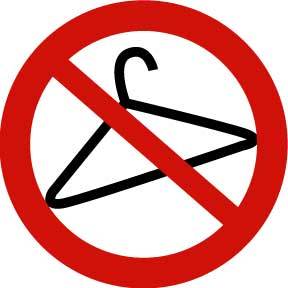
Criminalizing pregnancy, post-Roe v. Wade #biopower

Shocking and fascinating account from Democracy Now!, who interview Lynn Paltrow, founder and executive director of the National Advocates for Pregnant Women. (January 18, 2013: eve of the 40th anniversary of Roe v. Wade.)

"A new study shows hundreds of women in the United States have been arrested, forced to undergo unwanted medical procedures, and locked up in jails or psychiatric institutions, because they were pregnant. National Advocates for Pregnant Women found 413 cases when pregnant women were deprived of their physical liberty between 1973, when Roe v. Wade was decided, and 2005. At least 250 more interventions have taken place since then. In one case, a court ordered a critically ill woman in Washington, D.C., to undergo a C-section against her will. Neither she nor the baby survived. In another case, a judge in Ohio kept a woman imprisoned to prevent her from having an abortion."

Feministing also covered the report by the National Advocates for Pregnant Women, on January 17.

Wednesday, September 26, 2012

Creepshots and revenge porn

Paparazzi, the Duchess of Cambridge, and how all young women now seem to be under surveillance. Courtesy Kira Cochrane, in The Guardian.

"there is the evidence that young women are being coerced into taking suggestive pictures by their male peers, badgered in a way that is distinctly paparazzi-like. Teenagers today have grown up in an environment filled with both paparazzi pictures and images of ordinary women with their tops off. We live in the land built by gossip and lads' magazines over the past decade."

Wednesday, September 05, 2012

'Real' women vs. 'skinny' models

Sali Hughes reports for the The Guardian on the decision of German women's magazine Brigitte to shelve its policy of using amateur models.

'the publishing industry consistently sees reader focus groups choose thin models over larger women in both editorial and advertising. Attempts at using larger women have been as unsuccessful here as in Germany. And yet criticising thin women has become an easy, crowd-pleasing option in recent years (politicians cynically wheel out the anti-model stance on quiet days, often using the term "real women", an expression so offensive it undermines its intended meaning).'

Monday, September 03, 2012

More on hijras in Pakistan, courtesy NPR

"This year, hijras won a key legal battle to have a third gender option on national ID cards. About 50,000 Pakistanis are classified as hijras like Mehvish. The category includes self-reported transgender men and women, as well as transvestites, hermaphrodites and eunuchs." Check out the rest of the report here.

Sunday, September 02, 2012

RIP Shulamith Firestone, author of 'The Dialectic of Sex'

Published in 1970, Firestone's The Dialectic of Sex is an extremely provocative and well-argued "radical feminist" text. Emily Chertoff offers this eulogy for Firestone in The Atlantic.


Sunday, August 26, 2012

The Guerilla Girls on Pussy Riot

via The New York Times, August 26, 2012.

“Pussy Riot are our kind of girls: feminist activists in masks making trouble,” Kathe Kollwitz and Frida Kahlo, pseudonymous Guerrilla Girls, wrote in an e-mail. “But,” they added, “we live in a very different culture where art is not as dangerous, and we can pretty much do what we want...

One really inspiring thing about Pussy Riot is that they always make it clear that their actions are political and feminist,” the Guerrilla Girls wrote. “The world needs more feminist masked avengers. We urge everyone to make trouble, each in her own way.”

Monday, August 20, 2012

"Legitimate rape" and the one-sex system

Todd Akin, Republican candidate for the Missouri Senate seat, revived this medieval theory about rape and conception over this past weekend. Vanessa Hoggie gives this old, discredited, but still-alive-in-some-medieval-circles theory a thorough look, on The Guardian's blog.

This was a long-lived legal argument. Samuel Farr's Elements of Medical Jurisprudence contained the same idea as late as 1814:

"For without an excitation of lust, or the enjoyment of pleasure in the venereal act, no conception can probably take place. So that if an absolute rape were to be perpetrated, it is not likely she would become pregnant."

Friday, August 17, 2012

Fifth Annual Gayness Cure Walk

From The Onion:


raising funds and awareness to help cure, and eliminate, 
the "debilitating psychosexual disease" of gayness.

Saturday, August 11, 2012

Coffee and the housewife job of the fifties (plus a stewardess asks you to fly her)

Housewife discovers the mountain and gets to keep her job.


"Your coffee, sir!"


"he's always crabbing about my coffee, I could cry."


"I'm Maggie, fly me."

Tuesday, August 07, 2012

Isle of Flowers


Furtado is not so much portraying deliberately malevolent actions but the insularity of the bourgeoisie, who are protected not only from the stink and disease of their rotting waste, but from the realities of existence at the edge of an unequal society where pigs as a commodity rank higher than the poor who must scavenge after the fat porkers. Eisenstein move over.

Read more here.

And then, lest you think that the story of the tomato is only about Brazil, check out the latest episode of "Splendid Table" (from American Public Media). You can hear Barry Esterbrook, author of Tomatoland, talking about Florida tomatoes.


Among other things, you'll learn that Florida tomato growers use pesticides very heavily, about eight times as much California growers use. Laws regarding the exposure of workers to pesticides are frequently violated and ignored.

Esterbrook tells us that recently at one tomato work camp in Florida, three women, who were all pregnant at the same time, were forced to work in the fields. All three gave birth to very badly deformed babies.

Slavery also remains endemic in Florida's tomato fields, to this day, according to the US District Attorney for South Florida. Over the last 10-15 years seven cases have been successfully prosecuted and 1200 enslaved tomato workers have been freed. But slavery continues to exist, and who knows how many slaves are working to produce the tomatoes we purchase from Florida, because it is very difficult to prosecute. It is difficult for the enslaved to speak up.

...>