Showing posts with label gender. Show all posts
Showing posts with label gender. Show all posts
Sunday, January 31, 2016

Saturday, November 16, 2013
Third Gender Update, Bangladesh and Germany
Bangladesh has recognized the gender identity of hijras, whose rights are now recognized, including the right to identify their gender as hijra on government-issued documents, including passports (November 2013).
Germany (October 2013) has become the first country in Europe to permit babies with characteristics of both sexes to be registered as neither male nor female. Parents can choose to leave the gender category blank, creating the category of "indeterminate sex."
Germany (October 2013) has become the first country in Europe to permit babies with characteristics of both sexes to be registered as neither male nor female. Parents can choose to leave the gender category blank, creating the category of "indeterminate sex."
Monday, December 05, 2011
"sisterhood is easier in winter"

Hugo Schwyzer on how miniskirts turn women into bitches.
"policing does tangible damage to women's relationships with other women."
"competitive "bitchiness" towards other women rests on the assumption that men are so unreliable that there's no point in trying to "police" their behavior."
Saturday, June 18, 2011
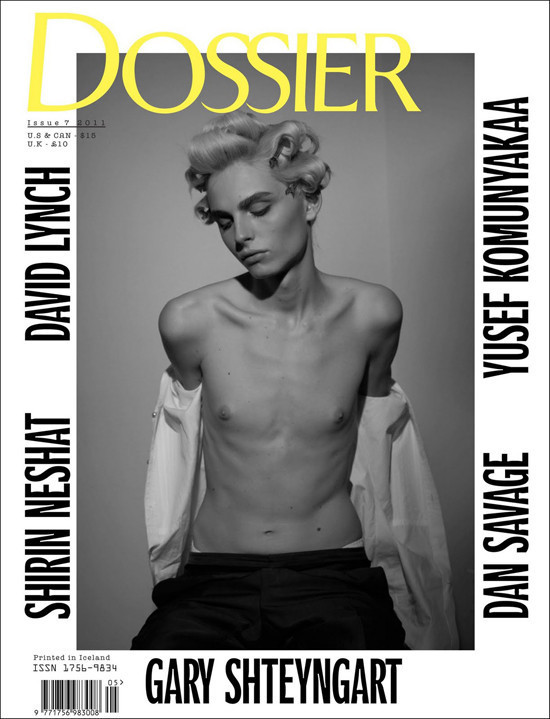
When is a man's bared chest obscene: if he has breasts
Tuesday, June 14, 2011
Don't look butch in Dubai

Watch out, 'boyat'! (Boyat is the derogatory Arabic term for butch females in the UAE.)
Women who wear men’s watches, douse themselves in male deodorant and wear baggy gents’ clothes are at risk of arrest by undercover police at Dubai’s malls and college campuses.
Read more here.
Thursday, September 16, 2010
"Teaching Japan's Salarymen to Be Their Own Men"
 Informative article by Howard W. French, The New York Times, Nov. 27, 2002. Excerpts below:
Not so long ago it was acceptable, even cool, here to introduce oneself as an ''average salaryman.'' The expression conjured images of the total company man -- someone who leaves work each day only to stay out late drinking and talking shop with colleagues, and whose first three words to his devoted wife upon arrival home were likely to be bath, meal, bed. As in, get them ready.
But those were the days of Japan's world-beating economy, when many women dreamed of nothing more than raising a family with a man with a lifetime job. During 12 years of flat growth, women have stampeded out of the kitchen and into the workplace. Now, as women have come to enjoy greater freedoms, there are suddenly few things less hip in Japan than to be an oyaji, or typical middle-aged man.
Like many social phenomena in Japan, the collapsing status of the corporate warrior has generated its own vocabulary. For younger women, the dark-suited company men seen everywhere walking two or three abreast, chain-smoking, their heads slightly bowed, are dasai (uncool) or nasakenai (clueless). For the wives to whom many of them return home in the evening, meanwhile, they are the nure-ochiba zoku (the wet leaf tribe) -- clingy, musty and emotionally spent.
Mr. [Masayoshi] Toyoda, who has built a national network of men's liberation groups, is anything but nostalgic. What he yearns for is the reinvention of the Japanese man, not a return to the strong-and-silent types on whose backs Japan's fantastic post-World War II success supposedly was constructed. Indeed, rebellion against the old model is what turned him on to liberation in the first place...
Unlike their American counterparts, who often invoke religion or mythology, members of Japan's budding men's movement do not gather in the woods to beat drums or sit in circles to hug or cry...
What many of them do share with their Western counterparts is a feeling that men must find a way to be both vigorous and sensitive. This starts by rediscovering life outside the workplace, sharing time with their families and, above all, learning -- often for the first time -- how to communicate personal thoughts...
One of Mr. Toyoda's priorities is lobbying companies and governments and sensitizing men about paternal leave. While almost all men are eligible, less than 1 percent of male employees presently use the benefit.
Thursday, December 31, 2009
J-Setting: Beyoncé revises Madonna
For now, this post on J-Setting will have to serve as a kind of place-holder. Beyoncé famously used J-Setting in her "Single Ladies" video. Another black gay dance style, this one, Southern, brought--for a moment--into the mainstream.
The March 2009 issue of Vibe has a longer and very useful piece on J-Setting, but it's not available on the web, and the links to Southern Voices on the Rod 2.0 Beta post are...down. More later, hopefully. But here's a teaser.
J-Setting, according to Vibe, originated at Mississippi's Jackson State, with the Prancing Jaycettes, the female dance line of JSU's marching band. In 1970, the Jaycettes (later, Jaysettes), abandoned their batons and began dancing in formation, but keeping their signature moves.
In 1997, DeMorris Adams joined the JSU as a baton twirler, the first male to do so. So developed the male, and eventually gay, cross-over...
The March 2009 issue of Vibe has a longer and very useful piece on J-Setting, but it's not available on the web, and the links to Southern Voices on the Rod 2.0 Beta post are...down. More later, hopefully. But here's a teaser.
J-Setting, according to Vibe, originated at Mississippi's Jackson State, with the Prancing Jaycettes, the female dance line of JSU's marching band. In 1970, the Jaycettes (later, Jaysettes), abandoned their batons and began dancing in formation, but keeping their signature moves.
In 1997, DeMorris Adams joined the JSU as a baton twirler, the first male to do so. So developed the male, and eventually gay, cross-over...
Wednesday, December 30, 2009
"Either/Or: Sports, sex, and the case of Caster Semenya"
Very interesting article about gender indeterminacy, by Ariel Levy, in The New Yorker, Nov. 30 2009.


In normal human development, when a zygote has XY, or male, chromosomes, the SRY—sex-determining region Y—gene on the Y chromosome “instructs” the zygote’s protogonads to develop as testes, rather than as ovaries. The testes then produce testosterone, which issues a second set of developmental instructions: for a scrotal sac to develop and for the testes to descend into it, for a penis to grow, and so on. But the process can get derailed. A person can be born with one ovary and one testicle. The SRY gene can end up on an X chromosome. A person with a penis who thinks he is male can one day find out that he has a uterus and ovaries. “Then, there is chromosomal variability that is invisible,” Anne Fausto-Sterling, the author of “Sexing the Body,” told me. “You could go your whole life and never know.”
All sorts of things can happen, and do. An embryo that is chromosomally male but suffers from an enzyme deficiency that partially prevents it from “reading” testosterone can develop into a baby who appears female. Then, at puberty, the person’s testes will produce a rush of hormones and this time the body won’t need the enzyme (called 5-alpha-reductase) to successfully read the testosterone. The little girl will start to become hairier and more muscular. Her voice may deepen, and her testes may descend into what she thought were her labia. Her clitoris will grow into something like a penis. Is she still a girl? Was she ever?
If a chromosomally male embryo has androgen-insensitivity syndrome, or A.I.S., the cells’ receptors for testosterone, an androgen, are deaf to the testosterone’s instructions, and will thus develop the default external sexual characteristics of a female. An individual with androgen-insensitivity syndrome has XY chromosomes, a vagina, and undescended testes, but her body develops without the ability to respond to the testosterone it produces. In fact, people with complete A.I.S. are less able to process testosterone than average women. Consequently, they tend to have exceptionally “smooth-skinned bodies with rounded hips and breasts and long limbs,” Dreger writes in “Hermaphrodites.”
People with incomplete A.I.S., on the other hand, could end up looking and sounding like Caster Semenya. Their bodies hear some of the instructions that the testosterone inside them is issuing. But that does not necessarily mean that they would have an athletic advantage.
Saturday, December 26, 2009
The Muxe: a 'third sex' in Oaxaca, Mexico
The local Zapotec people have made room for a third category, which they call “muxes” (pronounced MOO-shays) — men who consider themselves women and live in a socially sanctioned netherworld between the two genders...Not all muxes express their identities the same way. Some dress as women and take hormones to change their bodies. Others favor male clothes. What they share is that the community accepts them; many in it believe that muxes have special intellectual and artistic gifts.
Every November, muxes inundate the town for a grand ball that attracts local men, women and children as well as outsiders. A queen is selected; the mayor crowns her...Muxes are found in all walks of life in Juchitán, but most take on traditional female roles — selling in the market, embroidering traditional garments, cooking at home. Some also become sex workers, selling their services to men.
Excerpted from "A Lifestyle Distinct: The Muxe of Mexico," by Marc Lacey, New York Times, Sunday, Dec. 7, 2008. Go here for the full article and the not-to-be-missed slide show. Here's a sample (photo: Katie Orlinsky.)

NYT caption: "Beth-Sua enjoys a smoke at a vela in Oaxaca City. She traveled there from the Isthmus to represent her city’s muxes. Beth-Sua, born as Octavio, is a local organizer and H.I.V.-AIDS activist. She makes a living embroidering huipiles, the traditional blouse of the Isthmus region."
Every November, muxes inundate the town for a grand ball that attracts local men, women and children as well as outsiders. A queen is selected; the mayor crowns her...Muxes are found in all walks of life in Juchitán, but most take on traditional female roles — selling in the market, embroidering traditional garments, cooking at home. Some also become sex workers, selling their services to men.
Excerpted from "A Lifestyle Distinct: The Muxe of Mexico," by Marc Lacey, New York Times, Sunday, Dec. 7, 2008. Go here for the full article and the not-to-be-missed slide show. Here's a sample (photo: Katie Orlinsky.)

NYT caption: "Beth-Sua enjoys a smoke at a vela in Oaxaca City. She traveled there from the Isthmus to represent her city’s muxes. Beth-Sua, born as Octavio, is a local organizer and H.I.V.-AIDS activist. She makes a living embroidering huipiles, the traditional blouse of the Isthmus region."
Saturday, October 18, 2008
Women opting to become men in Albania
I had never heard of this practice, until I read this AP article, which appeared in my local paper. (This is from The Salt Lake Tribune, Oct. 6, 2008.) It's yet another example of the cultural construction of gender. One of the most famous examples is women among the patrilineal Nuer, who, if they have no brothers, sometimes take on the male role and take a bride, whose children (by a biological male) belong to the patrilineage of their (biologically female) father.
Tradition of 'sworn virgins' dying out in Albania
By Elena Becatoros
The Associated Press
SHKODRA, Albania - Drene Markgjoni spent 12 years in a hard-labor camp, punished for her fiance's attempt to flee Albania's regime, then one of the world's most repressive and isolationist.
She swore she would never suffer like that for somebody else again.
She pledged to forgo sex and marriage for the rest of her life, and declared herself a man.
That was six decades ago. Now 85, with close-cropped white hair, dressed in a man's blue striped shirt and black trousers, she greets visitors with a manly handshake. The way she walks, her confident gestures, everything about her is masculine.
Only her voice - soft and feminine - reveals her to be one of the last sworn virgins in Albania: Women who dress, act and are treated as men.
"I am happier like this," she says. "I don't regret it at all. Not a hair on my head does."
In this strongly patriarchal society where for centuries women had virtually no standing, sworn virgins enjoyed the same rights and respect as men. They could inherit property, work for a living and sit on the village council, although without the right to vote.
The privileges came at a price. They took an oath of celibacy and could never have sexual relations. And they could never go back to being women.
There are no official figures, but Antonia Young, a research fellow at the University of Bradford in Britain who has studied the practice for more than a decade, estimates that Albania had about 100 sworn virgins in the early 1990s. That number is now almost certainly much lower, as the practice and the women die out.
The reasons for becoming a sworn virgin can be practical - the head of the family dies with no male heir. Or they can be emotional - the woman does not want to marry the man chosen for her.
In Albania, particularly in the impoverished rural north, it was practically inconceivable for a woman to remain single and live alone.
But by becoming a man, Markgjoni was free. She could earn a living and eat and drink with men instead of being restricted to the kitchen. And she could adopt two habits denied to a traditional Albanian woman: smoking and wearing a watch.
She says she has worked in carpentry and farming, and in construction in her youth when, she proudly exclaims, she carried concrete slabs with the strength of two men.
Markgjoni still works, though now her job is less physical: making rosaries for her Catholic church in the northern town of Shkodra.
"I have had much more respect with my people, my family," she says.
The practice of sworn virgins stems from the Kanun, medieval laws handed down orally for generations before being codified in the early 20th century. It transcends religion, with sworn virgins found among Albania's majority Muslim community as well as the minority Catholics and Orthodox Christians.
In Albania's male-dominated society, a woman had virtually no rights: According to the Kanun, "a woman is known as a sack, made to endure as long as she lives in her husband's house." She could not inherit property, and work was limited to child-rearing and household chores.
Anthropologists stress that the tradition of sworn virgins, with its emphasis on celibacy, does not equate with homosexuality, which did not become legal in Albania until the 1990s.
"It's kind of the opposite extreme," says Young. "In one way, sworn virgins support patriarchy, because they support the feeling that you've got to have a man at the head, and this woman can be a man."
On the other hand, Young notes, "this would be a way round for a woman who had homosexual inclinations."
Traditionally the decision to become a sworn virgin turned on social reasons like not having enough men in the family, but recently it has become more a matter of the woman's choice, Young says.
With a deep rumbling voice and a distinctive swagger, Diana Rakipi, a security guard at a clinic in the seaside town of Durres, explains she always had a masculine outlook.
Rakipi, 54, who trades her security guard's cap for a military beret when not in uniform, never felt much like a girl.
"I have never worn a skirt," she says during a break at work. "It was not imposed by anyone for me to do this, nobody made me wear these clothes. I chose it."
Her Christian Orthodox family accepted her decision, and she has enjoyed the respect of her relatives and community ever since, she says, with nobody questioning her right to earn a living as she chooses.
"Nobody dared to ask me why don't I get married," she says. "I am considered No. 1 in my family."
This is the last generation of sworn virgins, according to Aferdita Onuzi, a professor at Tirana's Cultural, Anthropology and Arts Research Institute. In Albania these days, women enter parliament, government ministries, and the police force.
 Qamile Stema, of Barkanesh, is one of Albania's last generation of sworn virgins. (HEKTOR PUSTINA / AP)
When Qamile Stema was a child, there were two sworn virgins in Barkanesh, a village perched in the hills above the northern town of Kruje. Stema, the youngest of nine girls, decided to stay and take care of her mother when her three surviving elder sisters married and moved away.
Now 88, dressed in baggy pants with a black waistcoat over her shirt and sporting the traditional white woolen cap of northern Albanian Muslim men, Stema is Barkanesh's last sworn virgin. She has lived a freer, if lonelier, life, she says.
"I have talked with other men, traveled with other men, even teased the women," she says. "Even when I went to dances, I danced as a man."
She has the unwavering respect of her family, she says. She has no regrets.
"I decided never to marry and I don't complain for that decision," she says. "Especially nowadays, all the old people are alone. I am alone. I don't complain. Because their children have left, and they are not different from me, the couples."
Tradition of 'sworn virgins' dying out in Albania
By Elena Becatoros
The Associated Press
SHKODRA, Albania - Drene Markgjoni spent 12 years in a hard-labor camp, punished for her fiance's attempt to flee Albania's regime, then one of the world's most repressive and isolationist.
She swore she would never suffer like that for somebody else again.
She pledged to forgo sex and marriage for the rest of her life, and declared herself a man.
That was six decades ago. Now 85, with close-cropped white hair, dressed in a man's blue striped shirt and black trousers, she greets visitors with a manly handshake. The way she walks, her confident gestures, everything about her is masculine.
Only her voice - soft and feminine - reveals her to be one of the last sworn virgins in Albania: Women who dress, act and are treated as men.
"I am happier like this," she says. "I don't regret it at all. Not a hair on my head does."
In this strongly patriarchal society where for centuries women had virtually no standing, sworn virgins enjoyed the same rights and respect as men. They could inherit property, work for a living and sit on the village council, although without the right to vote.
The privileges came at a price. They took an oath of celibacy and could never have sexual relations. And they could never go back to being women.
There are no official figures, but Antonia Young, a research fellow at the University of Bradford in Britain who has studied the practice for more than a decade, estimates that Albania had about 100 sworn virgins in the early 1990s. That number is now almost certainly much lower, as the practice and the women die out.
The reasons for becoming a sworn virgin can be practical - the head of the family dies with no male heir. Or they can be emotional - the woman does not want to marry the man chosen for her.
In Albania, particularly in the impoverished rural north, it was practically inconceivable for a woman to remain single and live alone.
But by becoming a man, Markgjoni was free. She could earn a living and eat and drink with men instead of being restricted to the kitchen. And she could adopt two habits denied to a traditional Albanian woman: smoking and wearing a watch.
She says she has worked in carpentry and farming, and in construction in her youth when, she proudly exclaims, she carried concrete slabs with the strength of two men.
Markgjoni still works, though now her job is less physical: making rosaries for her Catholic church in the northern town of Shkodra.
"I have had much more respect with my people, my family," she says.
The practice of sworn virgins stems from the Kanun, medieval laws handed down orally for generations before being codified in the early 20th century. It transcends religion, with sworn virgins found among Albania's majority Muslim community as well as the minority Catholics and Orthodox Christians.
In Albania's male-dominated society, a woman had virtually no rights: According to the Kanun, "a woman is known as a sack, made to endure as long as she lives in her husband's house." She could not inherit property, and work was limited to child-rearing and household chores.
Anthropologists stress that the tradition of sworn virgins, with its emphasis on celibacy, does not equate with homosexuality, which did not become legal in Albania until the 1990s.
"It's kind of the opposite extreme," says Young. "In one way, sworn virgins support patriarchy, because they support the feeling that you've got to have a man at the head, and this woman can be a man."
On the other hand, Young notes, "this would be a way round for a woman who had homosexual inclinations."
Traditionally the decision to become a sworn virgin turned on social reasons like not having enough men in the family, but recently it has become more a matter of the woman's choice, Young says.
With a deep rumbling voice and a distinctive swagger, Diana Rakipi, a security guard at a clinic in the seaside town of Durres, explains she always had a masculine outlook.
Rakipi, 54, who trades her security guard's cap for a military beret when not in uniform, never felt much like a girl.
"I have never worn a skirt," she says during a break at work. "It was not imposed by anyone for me to do this, nobody made me wear these clothes. I chose it."
Her Christian Orthodox family accepted her decision, and she has enjoyed the respect of her relatives and community ever since, she says, with nobody questioning her right to earn a living as she chooses.
"Nobody dared to ask me why don't I get married," she says. "I am considered No. 1 in my family."
This is the last generation of sworn virgins, according to Aferdita Onuzi, a professor at Tirana's Cultural, Anthropology and Arts Research Institute. In Albania these days, women enter parliament, government ministries, and the police force.
 Qamile Stema, of Barkanesh, is one of Albania's last generation of sworn virgins. (HEKTOR PUSTINA / AP)
When Qamile Stema was a child, there were two sworn virgins in Barkanesh, a village perched in the hills above the northern town of Kruje. Stema, the youngest of nine girls, decided to stay and take care of her mother when her three surviving elder sisters married and moved away.
Now 88, dressed in baggy pants with a black waistcoat over her shirt and sporting the traditional white woolen cap of northern Albanian Muslim men, Stema is Barkanesh's last sworn virgin. She has lived a freer, if lonelier, life, she says.
"I have talked with other men, traveled with other men, even teased the women," she says. "Even when I went to dances, I danced as a man."
She has the unwavering respect of her family, she says. She has no regrets.
"I decided never to marry and I don't complain for that decision," she says. "Especially nowadays, all the old people are alone. I am alone. I don't complain. Because their children have left, and they are not different from me, the couples."
Sunday, August 03, 2008
"The XY Games": Jennifer Boylan
An important op-ed in today's Sunday Times on gender tests at the Olympics. Another sign of the increasing recognition of the existence of biologically-based gender ambiguity.
Boylan makes a number of significant and helpful observations:
First, on the non-binary nature of biological sex in human beings. (It's not just male/female.)
It would be nice to live in a world in which maleness and femaleness were firm and unwavering poles. People can be forgiven for wanting to live in a world as simple as this, a place in which something as basic as gender didn’t shift unsettlingly beneath our feet.
Over the past 40 years, dozens of female athletes tested in this manner have tested “positively” for maleness. That’s because these tests don’t measure “maleness” or “femaleness.” They measure — and not always reliably — the presence of a Y chromosome, or Y chromosomal material, which no small number of females have.
You might think that gender testing at the Olympics is conducted to weed out transsexual women, who might be perceived to have some sort of physical advantage over natal females. Yet this is not the case. Since 2004, the International Olympic Committee has allowed transsexuals to compete as long as they have had sex-reassignment surgery and have gone through a minimum of two years of post-operative hormone replacement therapy.
Fourth, the conclusion:
Boylan makes a number of significant and helpful observations:
First, on the non-binary nature of biological sex in human beings. (It's not just male/female.)
It would be nice to live in a world in which maleness and femaleness were firm and unwavering poles. People can be forgiven for wanting to live in a world as simple as this, a place in which something as basic as gender didn’t shift unsettlingly beneath our feet.
But gender is malleable and elusive, and we need to become comfortable with this fact, rather than afraid of it...
Most efforts to rigidly quantify the sexes are bound to fail. For every supposedly unmovable gender marker, there is an exception. There are women with androgen insensitivity, who have Y chromosomes. There are women who have had hysterectomies, women who cannot become pregnant, women who hate makeup, women whose object of affection is other women.
So what makes someone female then? If it’s not chromosomes, or a uterus, or the ability to get pregnant, or femininity, or being attracted to men, then what is it, and how can you possibly test for it?
The only dependable test for gender is the truth of a person’s life, the lives we live each day. Surely the best judge of a person’s gender is not a degrading, questionable examination. The best judge of a person’s gender is what lies within her, or his, heart.
Second, on "XY" females.Over the past 40 years, dozens of female athletes tested in this manner have tested “positively” for maleness. That’s because these tests don’t measure “maleness” or “femaleness.” They measure — and not always reliably — the presence of a Y chromosome, or Y chromosomal material, which no small number of females have.
The condition, known as androgen insensitivity, occurs in about 1 in 20,000 individuals. Basically, a woman may have a Y chromosome, but her body does not respond to the genetic information that it contains. Some women with androgen insensitivity live their lives unaware that they have it. By any measure, though (except the measure of the Olympic test), they are women.
Third, on transsexual Olympians:You might think that gender testing at the Olympics is conducted to weed out transsexual women, who might be perceived to have some sort of physical advantage over natal females. Yet this is not the case. Since 2004, the International Olympic Committee has allowed transsexuals to compete as long as they have had sex-reassignment surgery and have gone through a minimum of two years of post-operative hormone replacement therapy.
Fourth, the conclusion:
Maybe this means that Olympic officials have to learn to live with ambiguity, and make peace with a world in which things are not always quantifiable and clear.
That, if you ask me, would be a good thing, not just for Olympians, but for us all.
Unfortunately, Boylan only discusses ambiguous chromosomes, not ambiguous genitalia (hermaphroditism). On this subject, see Anne Fausto-Sterling's "The Five Sexes, Revisited."
Subscribe to:
Posts (Atom)
