Bangladesh has recognized the gender identity of hijras, whose rights are now recognized, including the right to identify their gender as hijra on government-issued documents, including passports (November 2013).
Germany (October 2013) has become the first country in Europe to permit babies with characteristics of both sexes to be registered as neither male nor female. Parents can choose to leave the gender category blank, creating the category of "indeterminate sex."
Showing posts with label sex. Show all posts
Showing posts with label sex. Show all posts
Saturday, November 16, 2013

Saturday, June 18, 2011
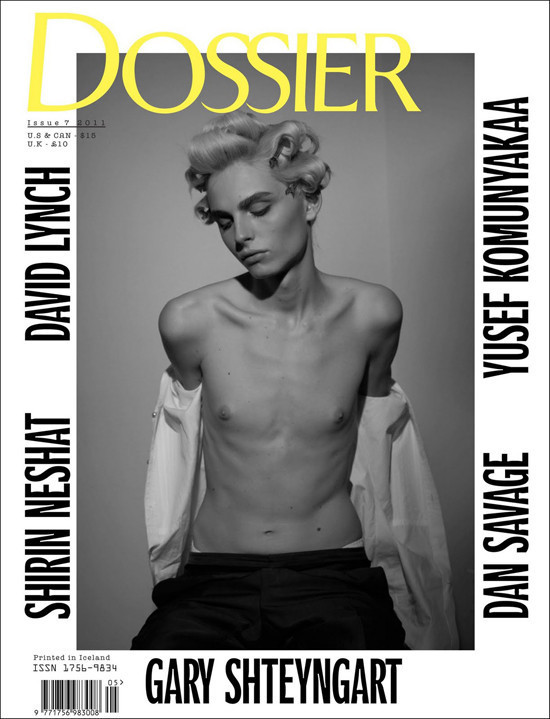
When is a man's bared chest obscene: if he has breasts
Tuesday, April 26, 2011
Pakistan's Supreme Court rules: Pakistanis can opt for 3rd sex on their identity cards
This decision, reported by BBC News, is really groundbreaking. The video is excellent, and note in particular how Shahzadi recounts that as a young person, s/he realized that s/he wasn't either a boy or a girl. Note that in the West, the normative account of the "transgendered" is that he or she was trapped in the wrong body. Because of the existence of the social grouping and cultural category of the hijra in South Asia, it is possible there to imagine oneself as belonging to a "third" category.
I hope all those Westerners who love to congratulate themselves for the supposed "advanced" position of the West on matters gender and sexual will note that Pakistan has moved way, way beyond "us" in the question of the rights of the transgendered. Can you imagine the impact on the transgendered in the US, if they were stopped by the police, and their "third" status was recognized on the driver's license or the passport?
Here's the full report from BBC--but watch the vid:
(6 April 2011 Last updated at 08:52 ET)
Pakistan has taken the landmark decision to allow transsexuals to have their own gender category on some official documents.
The country's Supreme Court has ruled that those Pakistanis who do not consider themselves to be either male or female should be allowed to choose an alternative sex when they apply for their national identity cards.
(6 April 2011 Last updated at 08:52 ET)
Pakistan has taken the landmark decision to allow transsexuals to have their own gender category on some official documents.
The country's Supreme Court has ruled that those Pakistanis who do not consider themselves to be either male or female should be allowed to choose an alternative sex when they apply for their national identity cards.
Saturday, December 26, 2009
The Muxe: a 'third sex' in Oaxaca, Mexico
The local Zapotec people have made room for a third category, which they call “muxes” (pronounced MOO-shays) — men who consider themselves women and live in a socially sanctioned netherworld between the two genders...Not all muxes express their identities the same way. Some dress as women and take hormones to change their bodies. Others favor male clothes. What they share is that the community accepts them; many in it believe that muxes have special intellectual and artistic gifts.
Every November, muxes inundate the town for a grand ball that attracts local men, women and children as well as outsiders. A queen is selected; the mayor crowns her...Muxes are found in all walks of life in Juchitán, but most take on traditional female roles — selling in the market, embroidering traditional garments, cooking at home. Some also become sex workers, selling their services to men.
Excerpted from "A Lifestyle Distinct: The Muxe of Mexico," by Marc Lacey, New York Times, Sunday, Dec. 7, 2008. Go here for the full article and the not-to-be-missed slide show. Here's a sample (photo: Katie Orlinsky.)

NYT caption: "Beth-Sua enjoys a smoke at a vela in Oaxaca City. She traveled there from the Isthmus to represent her city’s muxes. Beth-Sua, born as Octavio, is a local organizer and H.I.V.-AIDS activist. She makes a living embroidering huipiles, the traditional blouse of the Isthmus region."
Every November, muxes inundate the town for a grand ball that attracts local men, women and children as well as outsiders. A queen is selected; the mayor crowns her...Muxes are found in all walks of life in Juchitán, but most take on traditional female roles — selling in the market, embroidering traditional garments, cooking at home. Some also become sex workers, selling their services to men.
Excerpted from "A Lifestyle Distinct: The Muxe of Mexico," by Marc Lacey, New York Times, Sunday, Dec. 7, 2008. Go here for the full article and the not-to-be-missed slide show. Here's a sample (photo: Katie Orlinsky.)

NYT caption: "Beth-Sua enjoys a smoke at a vela in Oaxaca City. She traveled there from the Isthmus to represent her city’s muxes. Beth-Sua, born as Octavio, is a local organizer and H.I.V.-AIDS activist. She makes a living embroidering huipiles, the traditional blouse of the Isthmus region."
Sunday, August 03, 2008
"The XY Games": Jennifer Boylan
An important op-ed in today's Sunday Times on gender tests at the Olympics. Another sign of the increasing recognition of the existence of biologically-based gender ambiguity.
Boylan makes a number of significant and helpful observations:
First, on the non-binary nature of biological sex in human beings. (It's not just male/female.)
It would be nice to live in a world in which maleness and femaleness were firm and unwavering poles. People can be forgiven for wanting to live in a world as simple as this, a place in which something as basic as gender didn’t shift unsettlingly beneath our feet.
Over the past 40 years, dozens of female athletes tested in this manner have tested “positively” for maleness. That’s because these tests don’t measure “maleness” or “femaleness.” They measure — and not always reliably — the presence of a Y chromosome, or Y chromosomal material, which no small number of females have.
You might think that gender testing at the Olympics is conducted to weed out transsexual women, who might be perceived to have some sort of physical advantage over natal females. Yet this is not the case. Since 2004, the International Olympic Committee has allowed transsexuals to compete as long as they have had sex-reassignment surgery and have gone through a minimum of two years of post-operative hormone replacement therapy.
Fourth, the conclusion:
Boylan makes a number of significant and helpful observations:
First, on the non-binary nature of biological sex in human beings. (It's not just male/female.)
It would be nice to live in a world in which maleness and femaleness were firm and unwavering poles. People can be forgiven for wanting to live in a world as simple as this, a place in which something as basic as gender didn’t shift unsettlingly beneath our feet.
But gender is malleable and elusive, and we need to become comfortable with this fact, rather than afraid of it...
Most efforts to rigidly quantify the sexes are bound to fail. For every supposedly unmovable gender marker, there is an exception. There are women with androgen insensitivity, who have Y chromosomes. There are women who have had hysterectomies, women who cannot become pregnant, women who hate makeup, women whose object of affection is other women.
So what makes someone female then? If it’s not chromosomes, or a uterus, or the ability to get pregnant, or femininity, or being attracted to men, then what is it, and how can you possibly test for it?
The only dependable test for gender is the truth of a person’s life, the lives we live each day. Surely the best judge of a person’s gender is not a degrading, questionable examination. The best judge of a person’s gender is what lies within her, or his, heart.
Second, on "XY" females.Over the past 40 years, dozens of female athletes tested in this manner have tested “positively” for maleness. That’s because these tests don’t measure “maleness” or “femaleness.” They measure — and not always reliably — the presence of a Y chromosome, or Y chromosomal material, which no small number of females have.
The condition, known as androgen insensitivity, occurs in about 1 in 20,000 individuals. Basically, a woman may have a Y chromosome, but her body does not respond to the genetic information that it contains. Some women with androgen insensitivity live their lives unaware that they have it. By any measure, though (except the measure of the Olympic test), they are women.
Third, on transsexual Olympians:You might think that gender testing at the Olympics is conducted to weed out transsexual women, who might be perceived to have some sort of physical advantage over natal females. Yet this is not the case. Since 2004, the International Olympic Committee has allowed transsexuals to compete as long as they have had sex-reassignment surgery and have gone through a minimum of two years of post-operative hormone replacement therapy.
Fourth, the conclusion:
Maybe this means that Olympic officials have to learn to live with ambiguity, and make peace with a world in which things are not always quantifiable and clear.
That, if you ask me, would be a good thing, not just for Olympians, but for us all.
Unfortunately, Boylan only discusses ambiguous chromosomes, not ambiguous genitalia (hermaphroditism). On this subject, see Anne Fausto-Sterling's "The Five Sexes, Revisited."
Subscribe to:
Posts (Atom)
