Friday, November 12, 2010

Erica Jong on "attachment mothering"

Brilliant! From the Wall Street Journal, Nov. 6, 2010. Full article here.

We also assume that "mother" and "father" are exclusive terms, though in other cultures, these terms are applied to a variety of aunts, uncles and other adults. Kinship is not exclusively biological, after all, and you need a brood to raise a brood. Cooperative child-rearing is obviously convenient, but some anthropologists believe that it also serves another more important function: Multiple caregivers enhance the cognitive skills of babies and young children. Any family in which there are parents, grandparents, nannies and other concerned adults understands how readily children adapt to different caregivers. Surely this prepares them better for life than stressed-out biological parents alone.

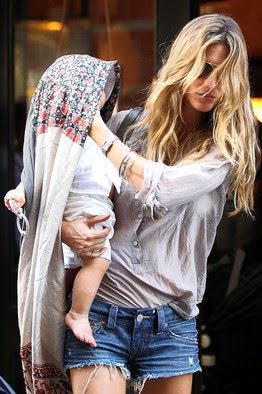
Baby as accessory: Gisele Bündchen with baby Benjamin (Getty Images)

Thursday, October 07, 2010

"Love Supreme: Gay Nuptials and the Making of Modern Marriage"

Adam Haslett, writing in The New Yorker, May 31, 2004. An excellent account of the debate, the issues, and the modern institution of marriage, to date.


According to the 2000 census, the first to collect such data, there are five hundred and ninety-four thousand same-sex couples living in the United States (and that’s no doubt an undercount, given people’s reluctance to report their sexual orientation to the government). But marriage requires the consent of a third party—namely, the state.


Thursday, September 16, 2010

Adolescent boys and cosmetic breast surgery

Shocking article by Alex Kuczynski, New York Times, June 14, 2007.

In 2006, according to the [American Society of Plastic Surgeons], nearly 14,000 boys age 13 to 19 underwent surgery to reduce the size of their breasts. That represents 70 percent of all the male patients who had such surgery last year, and an increase of 21 percent over the previous year for that age group...

In a culture that increasingly encourages young boys to be body conscious, demand for chiseled torsos and sculpted pecs is rising, so much so that the number of boys ages 13 to 19 who had breast reduction surgery last year is equal to the total number of all men who had the procedure just two years earlier, in 2004.

The foremost reason is the rise in obesity, according to several plastic surgeons who were interviewed...

Often, enlarged breasts are simply part of adolescence, most commonly caused by the hormonal fluctuation of puberty, according to the National Institutes of Health...
in most adolescents who are not obese, the condition will resolve itself spontaneously as the boy progresses through adolescence and produces more testosterone, said Dr. Brenda Kohn, an associate professor of pediatrics who specializes in pediatric endocrinology at New York University School of Medicine.

As such, she said, “It is very important that one not operate on a child who is still in puberty.”

(emphasis added)

"Teaching Japan's Salarymen to Be Their Own Men"

Informative article by Howard W. French, The New York Times, Nov. 27, 2002. Excerpts below:

Not so long ago it was acceptable, even cool, here to introduce oneself as an ''average salaryman.'' The expression conjured images of the total company man -- someone who leaves work each day only to stay out late drinking and talking shop with colleagues, and whose first three words to his devoted wife upon arrival home were likely to be bath, meal, bed. As in, get them ready.

But those were the days of Japan's world-beating economy, when many women dreamed of nothing more than raising a family with a man with a lifetime job. During 12 years of flat growth, women have stampeded out of the kitchen and into the workplace. Now, as women have come to enjoy greater freedoms, there are suddenly few things less hip in Japan than to be an oyaji, or typical middle-aged man.

Like many social phenomena in Japan, the collapsing status of the corporate warrior has generated its own vocabulary. For younger women, the dark-suited company men seen everywhere walking two or three abreast, chain-smoking, their heads slightly bowed, are dasai (uncool) or nasakenai (clueless). For the wives to whom many of them return home in the evening, meanwhile, they are the nure-ochiba zoku (the wet leaf tribe) -- clingy, musty and emotionally spent.

Mr. [Masayoshi] Toyoda, who has built a national network of men's liberation groups, is anything but nostalgic. What he yearns for is the reinvention of the Japanese man, not a return to the strong-and-silent types on whose backs Japan's fantastic post-World War II success supposedly was constructed. Indeed, rebellion against the old model is what turned him on to liberation in the first place...

Unlike their American counterparts, who often invoke religion or mythology, members of Japan's budding men's movement do not gather in the woods to beat drums or sit in circles to hug or cry...

What many of them do share with their Western counterparts is a feeling that men must find a way to be both vigorous and sensitive. This starts by rediscovering life outside the workplace, sharing time with their families and, above all, learning -- often for the first time -- how to communicate personal thoughts...

One of Mr. Toyoda's priorities is lobbying companies and governments and sensitizing men about paternal leave. While almost all men are eligible, less than 1 percent of male employees presently use the benefit.

Saturday, February 20, 2010

Metrosexual Tweens

The metrosexual revolution is taking hold, among tween boys.

"Masculinity in a Spray Can," Jan Hoffman, New York Times, Sunday Styles, Jan. 31, 2010.

My understanding of metrosexuality is that, in part, it is an effort to get men to purchase as many grooming products as men do currently. Huge profits are at stake. This article seems to indicate that the marketeers have done their job.

Body wash. Face wash. Exfoliator. Exfoliating wash. Body hydrator. Body spray. Deodorant. Shaving cream. Shampoos and conditioner. Hair gel, of course...

many psychologists, parents, market researchers and middle-school principals (with drawers full of confiscated spray cans), report a sharp surge in the last few years of the use of grooming products by tween boys. In a December 2007 report on teenage and tween grooming products, Packaged Facts, a market research firm, projected that worldwide retail sales for boys ages 8 to 19 would be almost $1.9 billion...

Boys themselves, at a younger age, have also become increasingly self-conscious about their appearance and identity...

“More insecurity equals more product need, equals more opportunity for marketers,” said Kit Yarrow, a professor of psychology and marketing at Golden Gate University...

To engage boys, marketers rely less on 30-second TV spots than on interactive Web sites, creating communities of young fans...

What further drives the boys’ rush to the products are girls themselves. Marshal Cohen, chief industry analyst for the market research firm NPD Group, said that in a recent survey, 41 percent of boys ages 8 to 18 said that one of their best friends was a girl.

“They shop with girls, and girls influence them,” Mr. Cohen said, much as the girls in the hit Nickelodeon tween show “iCarly” hold sway over Freddie, their hapless male buddy...

“Boys are paying attention to personal brands more than ever because it’s too easy to be criticized virally by a girl,” said Pat Fiore, a market consultant for body image products in Morristown, N.J...

With consumer researchers pumping out reports on strategies to attract tween boys — make them feel accepted by peers, yet make them feel like cool individuals — and the success, over all, of the expanding, multibillion dollar male grooming products industry, the market is hardly saturated.

Sunday, January 31, 2010

More on Pakistani hijras

"Spurred by the forceful chief justice, Iftikhar Chaudhry, who was restored after countrywide protests last year, normally moribund authorities have been ordered to ensure hijras enjoy the same rights as other Pakistanis, in matters of inheritance, employment and election registration."

By Declan Walsh, writing in The Guardian, Jan. 29. Read on. And be sure to watch the slide show.

Wednesday, January 06, 2010

Sterilization, race, votes

Jon Jeter in the Washington Post (June 13, 2004) on the racial politics of sterilization in Brazil. Excerpts below.

Trinidade, a local councilman, was running for the Bahia state legislature. He wanted [Claudia Barboza Santos'] vote. So they made a deal five years ago, and each got what they wanted: Trinidade arranged a sterilization procedure for Santos, and she voted for him...

Brazilian women are having fewer children. The fertility rate has decreased from 4.3 children per woman in 1980 to about 2 children now, according to government statistics. Nearly one in two Brazilian women of childbearing age have been sterilized, according to a 2001 government survey. Demographers and health experts believe the figure is even higher.

"We have a culture of sterilization in Brazil," said Jurema Werneck, executive director of Criola, a women's health organization here in Brazil. "It's nationwide. A lot of politicians are elected because of their sterilization promises."

Brazil's efforts have led to increased criticism from women's health organizations, civil rights agencies and relief workers who argue that sterilization is an ineffectual anti-poverty tool. They also contend that sterilization programs feed racist notions about who should have children and who should not...

You don't solve poverty by reducing family size," Werneck said. "You solve poverty by expanding the economy through greater educational opportunities, through land reform. You have to create opportunities for women, not restrict them. There are far too many black women who are told that the only effective method of contraception is sterilization. Some people are quite well meaning in this notion, but there is a racist ideology behind it."...

"I really see sterilization as an attempt to exterminate a problem, and that problem is poor people and in Brazil that means black people," [Catia Helena] Bispo said.


Monday, January 04, 2010

The Straight State

Review of Margot Canaday's The Straight State in The Nation, by Steven Epstein. Excerpts follow:

For some time now, scholars of sexuality (following in the footsteps of those who have studied and challenged the race and gender hierarchies embedded in state policies and actions) have professed the analytical goal of what historian Lisa Duggan, writing in 1994, called "queering the state." These scholars have argued that the supposed naturalness of the heterosexual couple, and the unnaturalness of alternatives, is presumed and reinforced in the ordinary workings of government. Canaday's substantial contribution is to trace, in gripping and at times horrifying detail, exactly how the United States came to operate in this fashion over the course of much of the twentieth century. The Straight State provides a compelling history of the designation of "the homosexual as the anticitizen."

...For Canaday, "the state" is no abstraction. Taking a fine-grained approach, she insists that the state is "what officials do," whether it's worrying about what transient men get up to when the lights go out or deciding which men and women who served in World War II should be issued the "blue discharges" that made them ineligible for benefits. (There were about 9,000 cases of the latter.) In particular, it seems, what officials did was develop elaborate screening mechanisms to police the boundaries of belonging. Early twentieth-century immigration inspectors were warned to watch for what were described as "striking particularities in dress, talkativeness, witticism, facetiousness...flightiness...unnatural actions, mannerisms, and other eccentricities" that might serve as the telltale signs of sexual perversion to be excluded at the port of entry. (The all-too-common "hidden sexual complexes among Hebrews" merited special vigilance, according to the Marine Hospital Service doctors who lent their expert gaze to the task; they also pointed to the "beardless face [and] the high pitched feminine voice" that were so often found among Italian men.) Around the same time, examiners of military recruits were instructed to screen out those males who "present the general body conformation of the opposite sex, with sloping narrow shoulders, broad hips, excessive pectoral and pubic adipose deposits, with lack of masculine [hair] and muscular markings." Especially in these early years of state attention, the array of suspect perversions was diverse and diffuse, but the markers of excludability were written on the skin for the trained observer to detect at a glance. As the bureaucracy grew and officials adopted more varied and sophisticated tools for what anthropologist James Scott has called "seeing like a state," officials strove to recognize forms of abnormality unbecoming to citizens that only gradually came into focus as what are now taken to be gay and lesbian practices and identities.

Canaday's argument is that in the United States, the processes of state-building, the exclusion of sexual minorities from the ranks of citizenship and the definition of a modern concept of homosexuality were mutually reinforcing...

Modern notions of homosexuality and the modern US bureaucratic state grew up together, Canaday argues. And this coincidence of timing, she suggests intriguingly, may even help explain why the state became, and remains, more officially homophobic than many of its counterparts in Europe, where the bureaucracy was already consolidated before homosexuality emerged as a concern to be reckoned with....

The larger argument, however, is that a history of the modern American state is simultaneously a genealogy of what we now take to be homosexuality. In the early period covered by the book, immigration and military personnel spoke not about homosexuals but about perverts, mannish women, men who displayed (in a curious turn of phrase) "feminism," "wolves" who preyed on younger men and the "lambs" who were their prey. This mix of bureaucratic, medical and colloquial lingo described a hodgepodge of varieties of gender inversion and nonnormative sexual practices. Over time, though, homosexuality took shape in its modern guise, defined less exclusively by gender roles and more by what psychoanalysts called "sexual-object choice": the sex of the desired partner. At the same time, "the homosexual" stabilized as a type of person defined by a knowable preference or orientation that was manifested in its "tendencies" even when behavior was absent. The story of this shift has been told before, but Canaday's innovation is to emphasize the role of the state, and not just medical and psychiatric experts, in these redefinitions...

Importantly, though, Canaday does not imagine that the state was in a position simply to etch its categories and meanings onto individuals, as if the latter were blank slates. Instead, she describes a complex process of mutual reinforcement and resistance, similar to what the philosopher of science Ian Hacking calls "looping effects," whereby powerful institutions categorize what they see people doing and present those understandings to the categorized, who may then internalize them, change them or reject them in ways that influence categorization down the line. Canaday describes how many of those caught in the spotlight of state scrutiny ended up reconceiving who they considered themselves to be...

It's worth underscoring the novelty of Canaday's approach. Much recent LGBT history, following in the footsteps of historian George Chauncey's pioneering book Gay New York, has been resolutely local...a focus on the state also allows Canaday to go further in linking the politics of sexuality to those of gender and race. On the one hand, she suggests how state administration of sexuality both resembled and differed from its management of gender and racial categories. On the other hand, she is attentive to the intersections, analyzing, for example, how the treatment of queer immigrants by federal authorities varied according to the immigrants' race or national origin, and considering how the attempts to drum lesbians out of the military accelerated precisely as women began making stronger claims for inclusion in the institution...

A crucial question to ask, however, is, What impact did all of this policing have on those who were not caught directly in its web? After all, most gay people (or people who engaged in homosexual behaviors) never brushed against it, and many of those who could have been trapped were never even spotted by military, immigration or welfare authorities...

What were the ripple effects of state action? Canaday argues, plausibly enough, that what is "individually devastating" can also be "broadly powerful"--that policies about immigration, military service and welfare eligibility sent clear messages that permeated the whole society. Yet she misses opportunities to prove the point or analyze this saturation in any detail...

Sunday, January 03, 2010

Taking stock of US feminism: the perils of identity politics

Excellent review of Gail Collins' When Everything Changed: The Amazing Journey of American Women from 1960 to the Present, from Ariel Levy, in The New Yorker. Excerpts follow, all emphases are mine.

At the Miss America pageant in Atlantic City in 1968, feminists threw items symbolic of women's oppression into a Freedom Trash Can, including copies of Playboy, girdles, high heels, bras and corsets. No bras were burned.

Bra burning—the most famous habit of women’s libbers—caused a fair amount of consternation back in the seventies, and the smoke has lingered...So it may be worth noting that it never actually happened.

It’s as if feminism were plagued by a kind of false-memory syndrome...We tend to imagine the fifties and the early sixties, for example, as a time when most American women were housewives. “In reality, however, by 1960 there were as many women working as there had been at the peak of World War II, and the vast majority of them were married,” Collins writes...

There are political consequences to remembering things that never happened and forgetting things that did. If what you mainly know about modern feminism is that its proponents immolated their underwear, you might well arrive at the conclusion that feminists are “obnoxious,” as Leslie Sanchez does in her new book, “You’ve Come a Long Way, Maybe: Sarah, Michelle, Hillary and the Shaping of the New American Woman” (Palgrave; $25)...


One sign of our cultural memory disorder is that you can describe a female governor of a state as “traditional” and not get laughed at...Conservative career women are eager to describe themselves in those terms. “I don’t like labels, but, if there’s a label for me, it would be ‘traditional,’ and I’m very proud to be traditional,’’ Cindy McCain told voters when her husband was running for President. Since 2000, she has been the chairman of Hensley & Company, one of the largest distributors of beer in this country, with annual revenues exceeding three hundred million dollars.

Neither she nor Sarah Palin is, of course, a traditional woman. In a traditional family, a wife and mother does not pursue success outside her own home...Unquestioned male authority is the basis of traditional marriage, and that is why the zealots of an earlier and more disruptive time wanted to scrap it.

Feminists have long been criticized for telling women that they could have it all. But conservatives have done us one better: apparently, you can have it all and be traditional, too...All of this raises a question: why has feminism, which managed to win so many battles—the notion of a woman with a career has become perfectly unexceptionable—remained anathema to millions of women who are the beneficiaries of its success?

Once, it was easy to say what feminism was. Its aim was to win full citizenship for women, starting with suffrage, an issue that began amassing support in the United States in the eighteen-forties. More than a century later, Betty Friedan was working in that tradition when, in 1966, she co-founded the National Organization for Women, whose goal was to obtain legislative protections for women and insure employment parity. Like the suffragists, Friedan was devoted to a politics of equality.

Here’s another detail we’ve forgotten: historically, it was the Republican Party that was more amenable to women’s rights...

By the late sixties and early seventies, of course, things had changed. The argument had moved from civic equality to personal liberation: feminists started talking about orgasms as well as ambitions...The radicals taking over feminism, many of whom were active in the civil-rights and antiwar movements, wanted to overthrow patriarchy, which would require transforming almost every aspect of society: child rearing, entertainment, housework, academics, romance, business, art, politics, sex.

Some of that happened and some of it didn’t. By the early seventies, the Supreme Court had granted legal protection to birth control and abortion. But the politics of equality—forget liberation—swiftly ran into resistance. Catholic and Protestant conservatives found a common threat: the destruction of the traditional family...The Republican Bob McDonnell, who won last week’s race to become governor of Virginia, described the peril in a master’s thesis he wrote in the nineteen-eighties: “A dynamic new trend of working women and feminists”—women who have sought “to increase their family income, or for some women, to break their perceived stereotypical role bonds and seek workplace equality and individual self-actualization”—is “ultimately detrimental to the family.”

In the run-up to the election, McDonnell scrambled to distance himself from the thesis. But he was telling a particular truth that liberals and conservatives have different reasons for evading: if the father works and the mother works, nobody is left to watch the kids. In societies where these families constitute the majority, either government acknowledges the situation and helps provide child care (as many European countries do) or child care becomes a luxury affordable for the affluent, and a major problem for everyone else.

Social movements, like armies, define themselves by their conquests, not by their defeats. Feminism failed to make child care available to all, let alone bring about the total reconfiguration of the family that revolutionary feminists had envisaged, and that would have changed this country on a cellular level. Like so many other ideals of the sixties and seventies, the state-backed egalitarian family has gone from seeming—to both political parties—practical and inevitable to seeming utterly beyond the pale. The easier victories involved representation, or at least symbolic representation. For all the backlash against Roe v. Wade, the movement had steady success in getting women into the government and the private-sector workforce. The contours of mainstream feminism started to change accordingly. A politics of liberation was largely supplanted by a politics of identity.

But, if feminism becomes a politics of identity, it can safely be drained of ideology. Identity politics isn’t much concerned with abstract ideals, like justice. It’s a version of the old spoils system: align yourself with other members of a group—Irish, Italian, women, or whatever—and try to get a bigger slice of the resources that are being allocated. If a demand for revolution is tamed into a simple insistence on representation, then one woman is as good as another. You could have, in a sense, feminism without feminists...

Revolutions are supposed to devour their young; in the case of feminism, it has been the other way around. [Leslie] Sanchez says that she speaks for many women who are happy to live and work in a reformed and comparatively fair America but dislike the movement responsible for this transformation...

But though Sanchez and her sisters (thirty-seven per cent of women describe themselves as conservative, and three out of four women abjure the label “feminist”) may not like rowdy revolutionary posturing, we live in a country that has been reshaped by the women’s movement, in which the traditional family is increasingly obsolete. As of September, according to the Bureau of Labor Statistics, more than sixty per cent of American women aged twenty and over were working or seeking work, and, according to the Shriver Report, women are either the primary or the co-breadwinner in two-thirds of American families. For many of them, this isn’t an exercise in empowerment; it’s about making a living and, for working mothers in particular, often a hard living.

Feminism as an identity politics has enjoyed real victories. It matters that women serve on the Supreme Court, that they make decisions in business, government, academia, and the media. But a preoccupation with representation suggests that feminism has lost its larger ambitions.

We’ve come a long way in the past forty years; there’s no “maybe” about it. The trouble is that the journey hasn’t always been in the intended direction. These days, we can only dream about a federal program insuring that women with school-age children have affordable child care. If such a thing seems beyond the realm of possibility, though, that’s another sign of our false-memory syndrome. In the early seventies, we very nearly got it.

In 1971, a bipartisan group of senators, led by Walter Mondale, came up with legislation that would have established both early-education programs and after-school care across the country. Tuition would be on a sliding scale based on a family’s income bracket, and the program would be available to everyone but participation was required of no one. Both houses of Congress passed the bill.

Nobody remembers this, because, later that year, President Nixon vetoed the Comprehensive Child Development Act...

So close. And now so far. The amazing journey of American women is easier to take pride in if you banish thoughts about the roads not taken. When you consider all those women struggling to earn a paycheck while rearing their children, and start to imagine what might have been, it’s enough to make you want to burn something.
Saturday, January 02, 2010

Hijras: legal recognition, India and Pakistan


Rather amazing.

India.

India's Election Commission has given eunuchs an independent identity by letting them choose their gender as "other" on ballot forms.

Read more here. (BBC, Nov. 13)

And Pakistan.

Pakistan's Supreme Court says eunuchs must be allowed to identify themselves as a distinct gender in order to ensure their rights.

BBC, Dec. 23. More here.

Comment on this from Kebabfest here.

Friday, January 01, 2010

Evolutionary Psychology Critiqued: William Deresiewicz

From a review in The Nation of a field I never knew existed, until reading this piece: literary Darwinism. After you read the review you will realize that you can continue to ignore this rather silly strand of literary studies. But the introduction to the review does a nice job of critiquing the broader field of evolutionary psychology, upon which literary Darwinism is based. Excerpts follow:

The appeal of evolutionary psychology is easy to grasp... The last few decades have left us so profoundly disoriented about the most urgent personal matters--gender roles, sexual norms, the possibility of creating lasting romantic relationships, not to mention absolutely everything to do with family structure--that it's no surprise to find people embracing a theory that promises to restore order. Once we had religion to tell us who we are. Then, for a while, we had Freud. Now we have evolutionary psychology, which, as an attempt to construct a science of human nature on Darwinian principles, marshals two of the most powerful ideas in contemporary culture: science, our most authoritative way of knowing, and nature, our highest ground of moral appeal...Equip yourself with a few basic concepts--natural selection, inclusive fitness, mating choice--and you, too, can explain the mysteries of human existence. That evolutionary psychology has no real intellectual credibility, that mainstream biology regards it as a house of sand, rarely seems to come up...

the problem lies less in the field's goals than in its claims. Much of its opposition is misguided and out-of-date... those who reject the notion of human psychology as a product of evolution (that is, of nature rather than culture) would undoubtedly recoil at the idea that human physiology is
not a product of evolution. The only alternative is creationism...Surely no one would dispute that there is a universal bee nature or dog nature or chimpanzee nature. Why not then acknowledge, at least in principle, a universal human nature, however various its elaborations in culture?


The question is, What does it consist of, how did it arise and can we discover it? Here is where evolutionary psychology falls down. EP claims that the human mind evolved in the Pleistocene, the 1.6 million years during which Homo sapiens emerged on the African savanna. EP seeks to identify apparently innate and cross-culturally universal aspects of human behavior (like speech), then tries to construct scenarios to explain why such behaviors would have been adaptive--would have promoted individual or collective survival and reproduction--in the Pleistocene environment. This all sounds reasonable until you discover that: (1) we don't actually know what the Pleistocene environment looked like; (2) we don't know how our Pleistocene ancestors lived; and (3) we now believe that evolution might happen a lot faster than we used to think, so much of our psychology may not be a product of the Pleistocene at all but of the 10,000 years since the emergence of civilization. There are other problems with the stories that EP likes to make up about how we got to be the way we are. They still have no support in genetics. If something's not genetic, it's not evolved. Also, not all behaviors (or physiological structures) are the result of selection pressures. Some are byproducts of other capacities, as literacy clearly is. Some are the result of functional shifts (insects' wings, for example, seem to have developed at first to regulate heat). Finally, there are some deeply ingrained human behaviors that seem very hard to justify in adaptive terms.

Thursday, December 31, 2009

Margaret Sanger, birth control, eugenics

Rebecca Tuhus-Dubrow on Margaret Sanger, from The Nation.

In March 1914, Sanger launched The Woman Rebel, an eight-page monthly produced out of her apartment. At this stage she advocated contraception for feminist reasons but also as part of an anticapitalist agenda: Workers, in her view, were multiplying too fruitfully, thus cheapening their labor; birth control offered a weapon for the revolution. In the first issue she wrote, "Woman is enslaved by the world machine, by sex conventions, by motherhood and its present necessary child-rearing, by wage-slavery, by middle-class morality, by customs, laws and superstitions"...

In October 1916 Sanger opened a clinic in Brownsville, Brooklyn, again testing the law. Hundreds of women, mostly Jewish and Italian immigrants, flocked there to receive birth control information and instruction. In a newspaper interview, Sanger boasted, "You can hear them calling from house to house in the congested district, 'Oh, Mrs. Rosenbaum, you ought to see this; this is something fine!'" But after ten days, the police shut the clinic down and arrested Sanger and her colleagues. Sanger spent several weeks in prison, but the sacrifice paid off: The case resulted in a court decision that contraception could be prescribed by doctors in New York State for general health reasons, not just for the prevention of venereal disease. This court decision, and the tremendous national attention generated through Sanger's sensational tactics, were major victories. Sanger's radicalism advanced her cause at this stage, although as she shifted to a more moderate approach, she tried to distance herself from these roots....

Although Sanger's arguments centered on the rights of women to be emancipated from conscripted motherhood, broader social ideologies were always present as well. Initially anticapitalist, she later adopted eugenic reasoning; later still, during the Depression, she insisted that birth control for the poor would solve the economy's problems. The common thread was that fewer children were better than more--a reasonable opinion with problematic implications.

Her primary exposure was to the masses of women who desperately wanted to control their family size. She received a constant stream of letters thanking her and soliciting advice, and answered many of them personally and with care. "You must not look upon this relationship as if you were a bad girl," she wrote to one young woman distraught over the premarital loss of her virginity. But presumably Sanger never received letters from the "unfit" reporting the tragedies that resulted from eugenic policies of forced sterilization. Her own views on the "dysgenic" are chilling. In a speech called "My Way to Peace" (she considered birth control the antidote to war, to boot), she advocated "a stern and rigid policy of sterilization" in order to control the reproduction of "morons, mental defectives, epileptics."

She did not regard the poor as inherently "unfit"--after all, she herself came from a poor family. She believed access to birth control would enable the working classes to provide for and nurture their children; lower quantity would mean higher quality. And in a milieu where racism was common, she frowned on prejudice in her clients and won the admiration of W.E.B. Du Bois for her work with the black community. But she believed that certain traits, such as epilepsy, mental retardation and physical disabilities, should disqualify people from reproducing. In 1934, in response to a questionnaire for the Yale News, she wrote of the new Nazi sterilization laws for the "unfit" (which were based on the proposals of American eugenicists): "If by 'unfit' is meant the physical or mental defects of a human being, that is an admirable gesture but if 'unfit' refers to races or religions, then that is another matter which I frankly deplore." (Sanger later helped a number of Jews escape from Europe by promising them work in the States.)

Sanger's concept of worthwhile life, then, was ruthlessly narrow, and she readily disregarded the rights of certain people. Also, she naïvely failed to see that oppression easily leaks beyond porous barriers. In Nazi Germany, the sterilization laws she admired--explicitly directed at the mentally retarded, schizophrenic and comparable classes--were, of course, soon turned against the Jews and other ethnic groups.

In the United States, involuntary sterilization was also scandalously widespread. In 1927 the practice received the blessing of the Supreme Court in Buck v. Bell, which upheld the compulsory sterilization of a poor young mother, Carrie Buck, who was deemed "feeble-minded." The laws technically applied to the "feeble-minded" and other pseudo-scientifically designated "dysgenic" sorts. But in practice, the victims of involuntary sterilization--and there were tens of thousands of them, over the course of decades--were simply poor women and girls, disproportionately black, Puerto Rican and Native American...

The conflation of eugenics and reproductive rights has resurfaced...in a different context. New genetic technologies herald the arrival of a "new eugenics," allowing the creation of "designer babies." The original eugenics was a misguided utopian scheme gone disastrously awry, all too typical of its time; the sequel, appropriately for ours, is about consumer choice. In both cases, threats lurk among the apparent promises: This time, unfettered use of enhancement technologies could lead to starkly deepened inequalities and disconcerting control over human evolution...

The conflation of eugenics and reproductive rights has resurfaced, however, in a different context. New genetic technologies herald the arrival of a "new eugenics," allowing the creation of "designer babies." The original eugenics was a misguided utopian scheme gone disastrously awry, all too typical of its time; the sequel, appropriately for ours, is about consumer choice. In both cases, threats lurk among the apparent promises: This time, unfettered use of enhancement technologies could lead to starkly deepened inequalities and disconcerting control over human evolution.

"Lay off men": Doris Lessing

Lay off men, Lessing tells feminists:
Novelist condemns female culture that revels in humiliating other sex

by Fiachra Gibbons, The Guardian, August 14, 2001

The novelist Doris Lessing yesterday claimed that men were the new silent victims in the sex war, "continually demeaned and insulted" by women without a whimper of protest.

Lessing, who became a feminist icon with the books The Grass is Singing and The Golden Notebook, said a "lazy and insidious" culture had taken hold within feminism that revelled in flailing men.

Young boys were being weighed down with guilt about the crimes of their sex, she told the Edinburgh book festival, while energy which could be used to get proper child care was being dissipated in the pointless humiliation of men.

"I find myself increasingly shocked at the unthinking and automatic rubbishing of men which is now so part of our culture that it is hardly even noticed," the 81-year-old Persian-born writer said yesterday.

"Great things have been achieved through feminism. We now have pretty much equality at least on the pay and opportunities front, though almost nothing has been done on child care, the real liberation.

"We have many wonderful, clever, powerful women everywhere, but what is happening to men? Why did this have to be at the cost of men?

"I was in a class of nine- and 10-year-olds, girls and boys, and this young woman was telling these kids that the reason for wars was the innately violent nature of men.

"You could see the little girls, fat with complacency and conceit while the little boys sat there crumpled, apologising for their existence, thinking this was going to be the pattern of their lives."

Lessing said the teacher tried to "catch my eye, thinking I would approve of this rubbish".

She added: "This kind of thing is happening in schools all over the place and no one says a thing.

"It has become a kind of religion that you can't criticise because then you become a traitor to the great cause, which I am not.

"It is time we began to ask who are these women who continually rubbish men. The most stupid, ill-educated and nasty woman can rubbish the nicest, kindest and most intelligent man and no one protests.

"Men seem to be so cowed that they can't fight back, and it is time they did."

Lessing claimed that much of the "great energy" whipped up by feminism had "been lost in hot air and fine words when we should have been concentrating on changing laws.

"We have got the pay but only real equality comes when child care is sorted out and it hasn't been yet, well not for those who really need it anyway"...

J-Setting: Beyoncé revises Madonna

For now, this post on J-Setting will have to serve as a kind of place-holder. Beyoncé famously used J-Setting in her "Single Ladies" video. Another black gay dance style, this one, Southern, brought--for a moment--into the mainstream.


The March 2009 issue of Vibe has a longer and very useful piece on J-Setting, but it's not available on the web, and the links to Southern Voices on the Rod 2.0 Beta post are...down. More later, hopefully. But here's a teaser.

J-Setting, according to Vibe, originated at Mississippi's Jackson State, with the Prancing Jaycettes, the female dance line of JSU's marching band. In 1970, the Jaycettes (later, Jaysettes), abandoned their batons and began dancing in formation, but keeping their signature moves.

In 1997, DeMorris Adams joined the JSU as a baton twirler, the first male to do so. So developed the male, and eventually gay, cross-over...

Wednesday, December 30, 2009

"The Domestic Gulag"

Excerpt from Lura Kipnis' Against Love: A Polemic. Harpers Magazine, Oct. 2003, pp. 15-18.

Excerpt from the excerpt:

You can't leave the house without saying where you're going...You can't make plans without consulting the other persons, particularly not for evenings and weekends...You can't leave the dishes for later..You can't not notice whether the house is neat or messy...You can't leave the toilet seat up...You can't leave female-hygiene products out...You can't sleep late if the other person has to get up early...You can't watch soap operas without getting made fun of...Your best friends can't call after ten...You can't have your own bank account...You can't analyze the cinematography in a movie that they were emotional about...You can't not 'communicate your feelings.' Except when those feelings are critical, which they should not be.

Thus is love obtained.

"Either/Or: Sports, sex, and the case of Caster Semenya"

Very interesting article about gender indeterminacy, by Ariel Levy, in The New Yorker, Nov. 30 2009.

In normal human development, when a zygote has XY, or male, chromosomes, the SRY—sex-determining region Y—gene on the Y chromosome “instructs” the zygote’s protogonads to develop as testes, rather than as ovaries. The testes then produce testosterone, which issues a second set of developmental instructions: for a scrotal sac to develop and for the testes to descend into it, for a penis to grow, and so on. But the process can get derailed. A person can be born with one ovary and one testicle. The SRY gene can end up on an X chromosome. A person with a penis who thinks he is male can one day find out that he has a uterus and ovaries. “Then, there is chromosomal variability that is invisible,” Anne Fausto-Sterling, the author of “Sexing the Body,” told me. “You could go your whole life and never know.”

All sorts of things can happen, and do. An embryo that is chromosomally male but suffers from an enzyme deficiency that partially prevents it from “reading” testosterone can develop into a baby who appears female. Then, at puberty, the person’s testes will produce a rush of hormones and this time the body won’t need the enzyme (called 5-alpha-reductase) to successfully read the testosterone. The little girl will start to become hairier and more muscular. Her voice may deepen, and her testes may descend into what she thought were her labia. Her clitoris will grow into something like a penis. Is she still a girl? Was she ever?

If a chromosomally male embryo has androgen-insensitivity syndrome, or A.I.S., the cells’ receptors for testosterone, an androgen, are deaf to the testosterone’s instructions, and will thus develop the default external sexual characteristics of a female. An individual with androgen-insensitivity syndrome has XY chromosomes, a vagina, and undescended testes, but her body develops without the ability to respond to the testosterone it produces. In fact, people with complete A.I.S. are less able to process testosterone than average women. Consequently, they tend to have exceptionally “smooth-skinned bodies with rounded hips and breasts and long limbs,” Dreger writes in “Hermaphrodites.”

People with incomplete A.I.S., on the other hand, could end up looking and sounding like Caster Semenya. Their bodies hear some of the instructions that the testosterone inside them is issuing. But that does not necessarily mean that they would have an athletic advantage.

Sunday, December 27, 2009

Skinny male models emerge as the prototype (winter '07-'08)

From "The Vanishing Point," by Guy Trebay, New York Times, Thursday Styles, Feb. 7, 2008. (Thanks, Stephen.) Read the entire article here. Be sure to check out the slide show. (Photo: Karl Prouse/Catwalking/Getty Images.)

The last line quoted below may be the most significant.

Where the masculine ideal of as recently as 2000 was a buff 6-footer with six-pack abs, the man of the moment is an urchin, a wraith or an underfed runt...

Wasn’t it just a short time ago that the industry was up in arms about skinny models? Little over a year ago, in Spain, designers were commanded to choose models based on a healthy body mass index...The models in question were women, and it’s safe to say that they remain as waiflike as ever. But something occurred while no one was looking. Somebody shrunk the men...

According to a study by the Centers for Disease Control and Prevention, Americans are taller and much heavier today than 40 years ago. The report, released in 2002, showed that the average height of adult American men has increased to 5-9 ½ in 2002 from just over 5-8 in 1960. The average weight of the same adult man had risen dramatically, to 191 pounds from 166.3.

Nowadays a model that weighed in at 191 pounds, no matter how handsome, would be turned away from most agencies or else sent to a fat farm...

In terms of image, the current preference is for beauty that is not fully evolved.

[Model Demián] Tkach said that when he came here from Mexico, where he had been working: “My agency asked me to lose some muscle. I lost a little bit to help them, because I understand the designers are not looking for a male image anymore. They’re looking for some kind of androgyne.”

Saturday, December 26, 2009

The Muxe: a 'third sex' in Oaxaca, Mexico

The local Zapotec people have made room for a third category, which they call “muxes” (pronounced MOO-shays) — men who consider themselves women and live in a socially sanctioned netherworld between the two genders...Not all muxes express their identities the same way. Some dress as women and take hormones to change their bodies. Others favor male clothes. What they share is that the community accepts them; many in it believe that muxes have special intellectual and artistic gifts.

Every November, muxes inundate the town for a grand ball that attracts local men, women and children as well as outsiders. A queen is selected; the mayor crowns her...Muxes are found in all walks of life in Juchitán, but most take on traditional female roles — selling in the market, embroidering traditional garments, cooking at home. Some also become sex workers, selling their services to men.


Excerpted from "A Lifestyle Distinct: The Muxe of Mexico," by Marc Lacey, New York Times, Sunday, Dec. 7, 2008. Go here for the full article and the not-to-be-missed slide show. Here's a sample (photo: Katie Orlinsky.)


NYT caption: "Beth-Sua enjoys a smoke at a vela in Oaxaca City. She traveled there from the Isthmus to represent her city’s muxes. Beth-Sua, born as Octavio, is a local organizer and H.I.V.-AIDS activist. She makes a living embroidering huipiles, the traditional blouse of the Isthmus region."

Thursday, December 24, 2009

Gay kissing in public: still (very) taboo

I'm posting this almost three years after the original publication, but it's still relevant. And will no doubt remain relevant for some time. From the New York Times Sunday Styles section, Feb. 18, 2007. Entitled "A Kiss Too Far?" (photo, Rahav Segev).

"Why is it that behavioral latitudes permit couples of one sort to indulge freely in public displays lusty enough to suggest short-term motel stays, while entire populations, albeit minority ones, live real-time versions of the early motion picture Hays Code: a peck on the cheek in public, one foot squarely planted on the floor?"

Saturday, June 27, 2009

Lisa Duggan, on the 40th anniversary of Stonewall

Very important interview, from Democracy Now!

"...many grassroots organizations, like the Audre Lorde Project, which was just represented here, have very broad goals and define queer issues as being the issues that affect most of us, rather than the issues that affect only gay people. So, for instance, healthcare and access to healthcare is a big issue for queer people. The access to homeless shelters that are queer-friendly is very important for queer youth. A very large proportion of homeless youth are LGBT."

See Duggan's article in The Nation about trend-setting Utah here.

Photo by me, of exhibit in window of the Stonewall In, West Village, New York City. (Original here.)